UX Designer Internship | Summer 2025
View the Live Website here!
EnKoat
Website Design
User-Centered Design
UX Research & Analysis
IMPACT
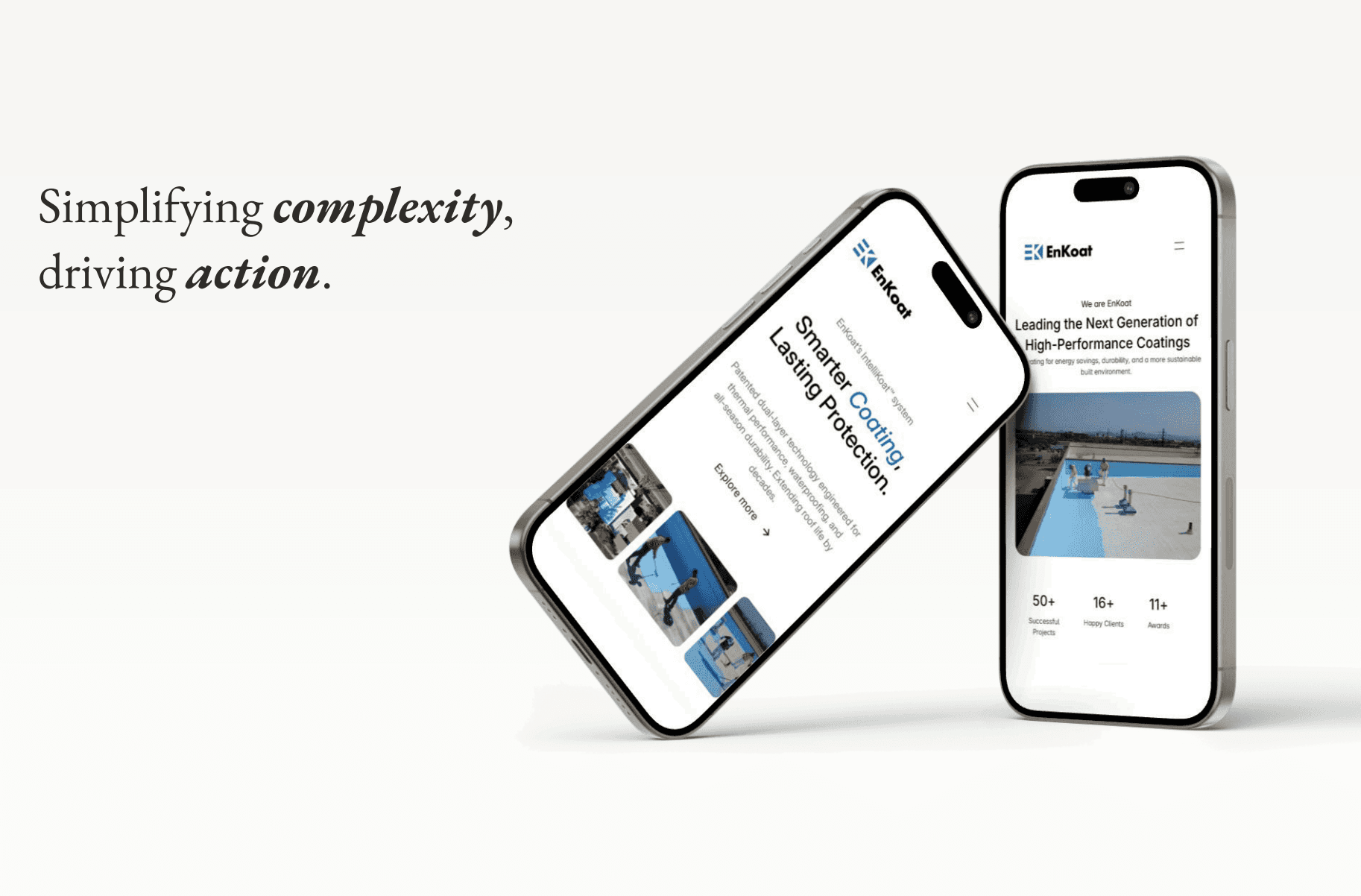
The EnKoat website is designed to simplify complex product information into a clean, intuitive experience that guides users from understanding to action.
01
Clear Structure
02
Seamless Navigation
03
Action CTAs
04
Credibility Layer
TIMELINE
May 2025 - August 2025
ROLE
UX Researcher & UI Designer
CLIENT
EnKoat LLC
TOOLS
Figma - For designing
Framer - For development
Notion - UX Documentation
Slack - Communication
SUMMARY
During my internship at EnKoat, a Chandler-based materials science startup, I led the redesign of their production website to better reflect the company’s evolving brand and support its business goals.
The existing website, built over 6 years ago, no longer aligned with the company’s positioning or user expectations. My role was to transform it into a modern, scalable, and conversion-oriented digital experience that could effectively communicate complex product offerings and drive customer engagement.
This project was successfully launched and is currently live, supporting real users and business operations.
View the Live Website here!
BUSINESS CONTEXT
EnKoat operates in a highly technical space, where clarity, credibility, and trust are critical for conversion.
The website serves as a key touchpoint for:
Potential clients exploring product capabilities
Partners evaluating business credibility
Customers requesting quotes and services
This made the redesign not just a visual update, but a business-critical initiative impacting how the company presents itself in the market.
PROBLEM STATEMENT
Content Overload
Dense, unstructured content increased cognitive load, making it difficult for users to quickly scan and understand key information.
Navigation & CTAs
Unclear navigation and poorly placed CTAs made it hard for users to find key pages and take action, reducing engagement and conversions.
UI & Trust
An outdated interface and lack of real-world proof points reduced credibility and user trust.
COMPETITIVE ANALYSIS
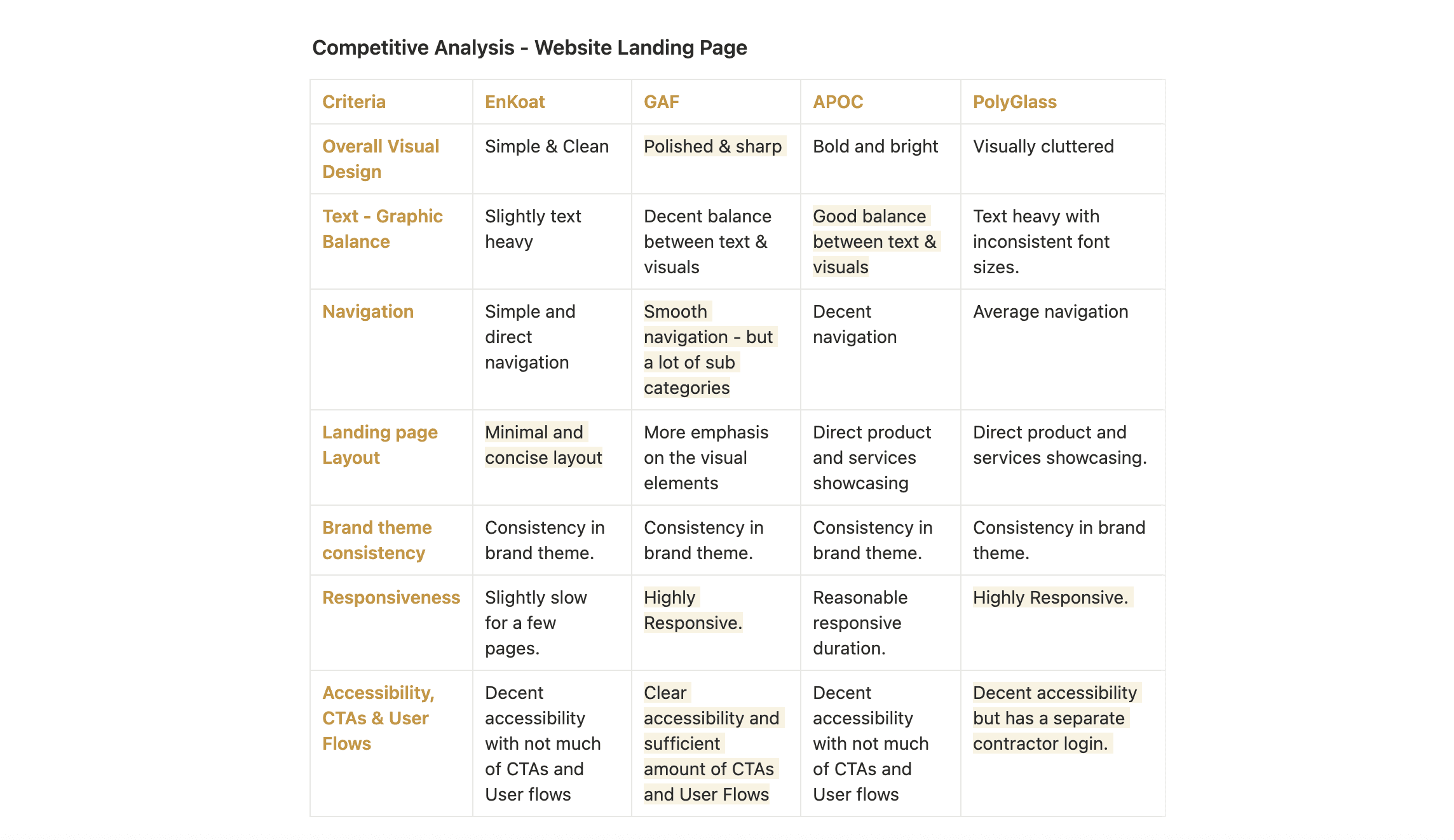
Conducted a competitive analysis to evaluate the functionality, UX, and UI of similar websites, identifying key design and usability insights.
DESIGN STRATEGY
To address these issues, I designed an UX strategy and executed a complete redesign:
UX Research
Identified usability gaps through heuristic evaluation and competitor benchmarking.
IA
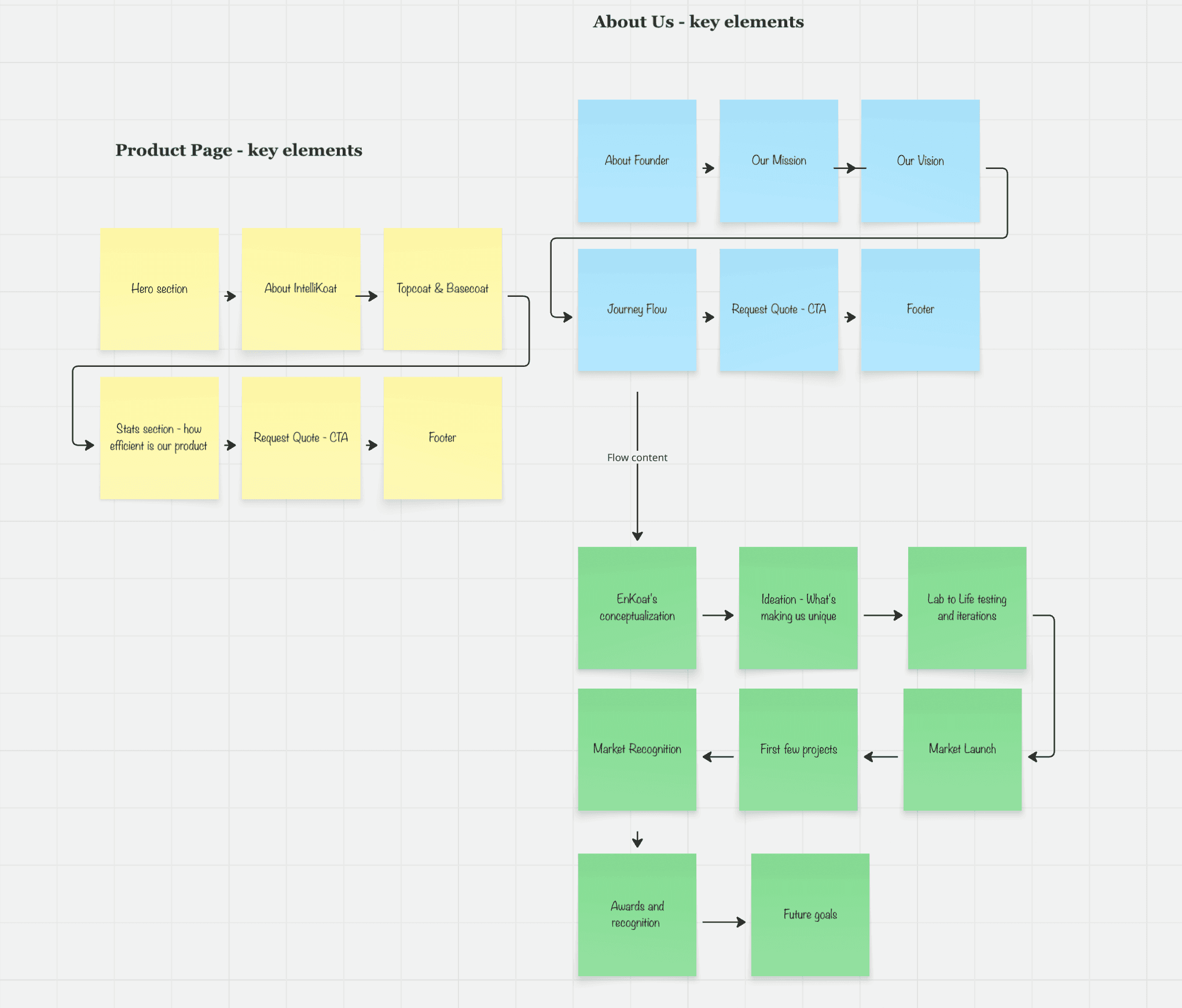
Simplified site structure into intuitive categories with scannable layouts.
Design System
Built a cohesive system with consistent typography, color, and reusable components.
Design
Improved design layout, structure, CTAs, engaging visuals, and color contrast to meet WCAG standards.
Testing & Iteration
Validated prototypes with target users and refined design based on feedback.
THE SOLUTION
01
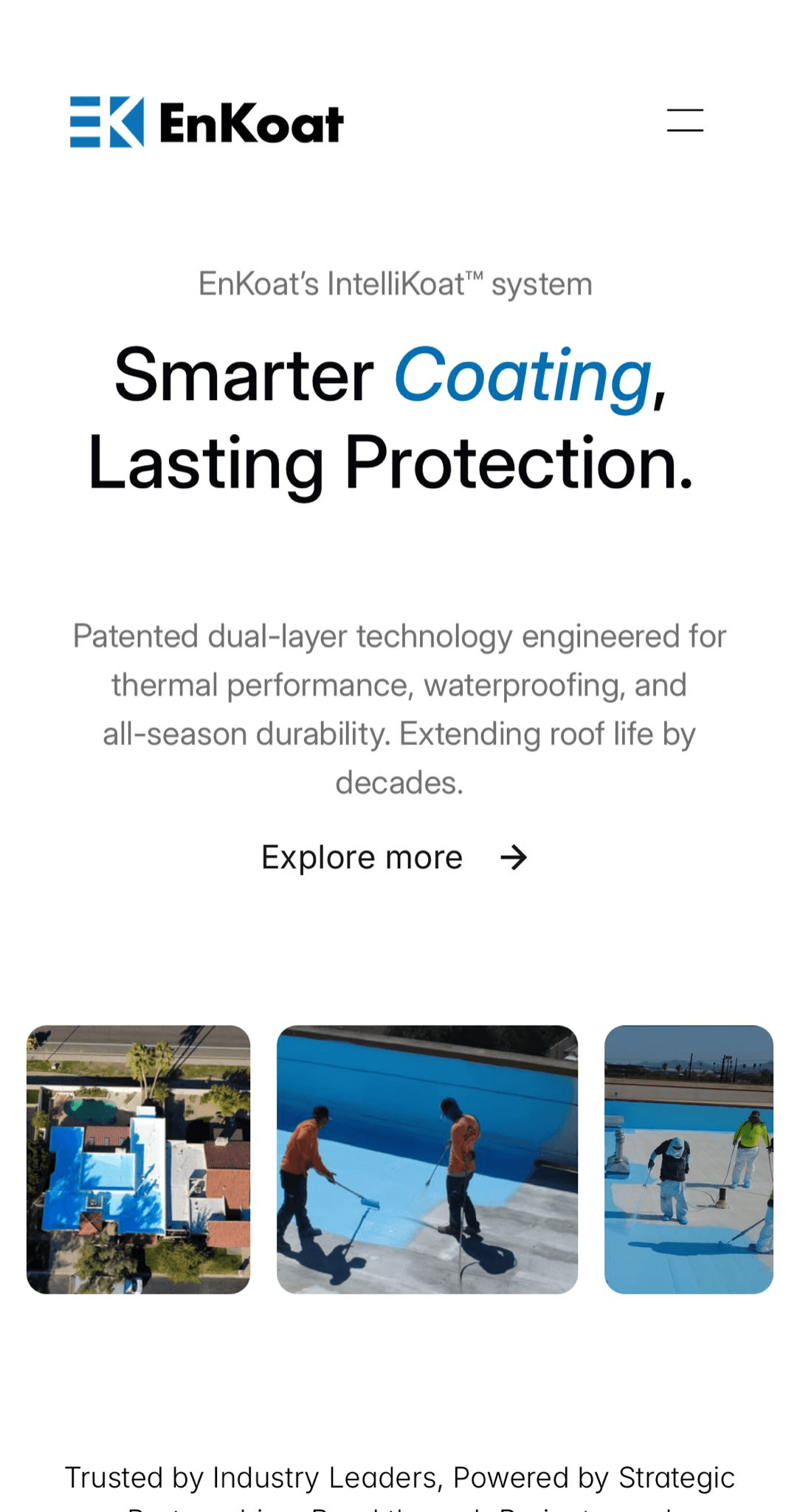
Responsive & Adaptive Design
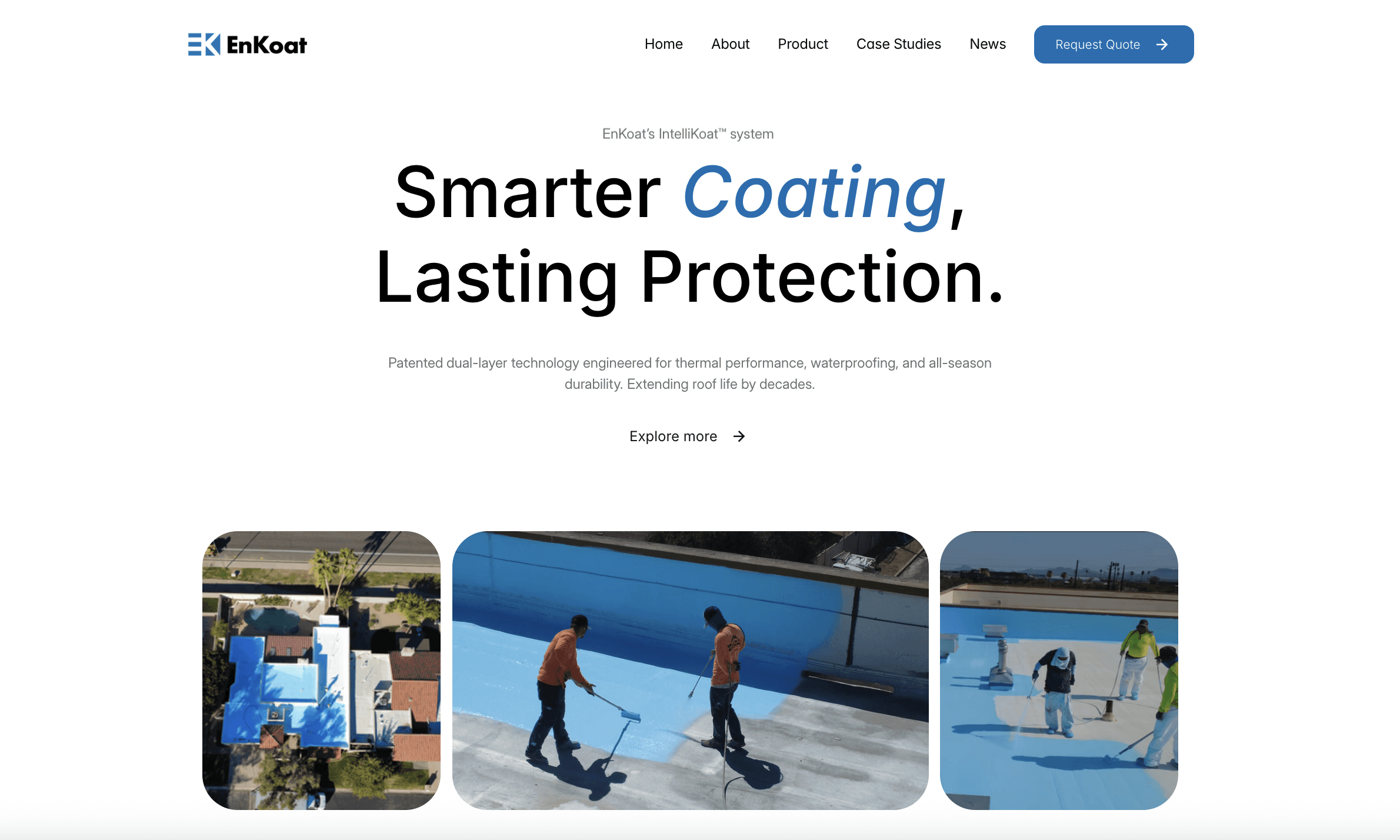
Optimized layouts for multiple screen sizes, ensuring a consistent and seamless experience across desktop, tablet, and mobile devices.
02
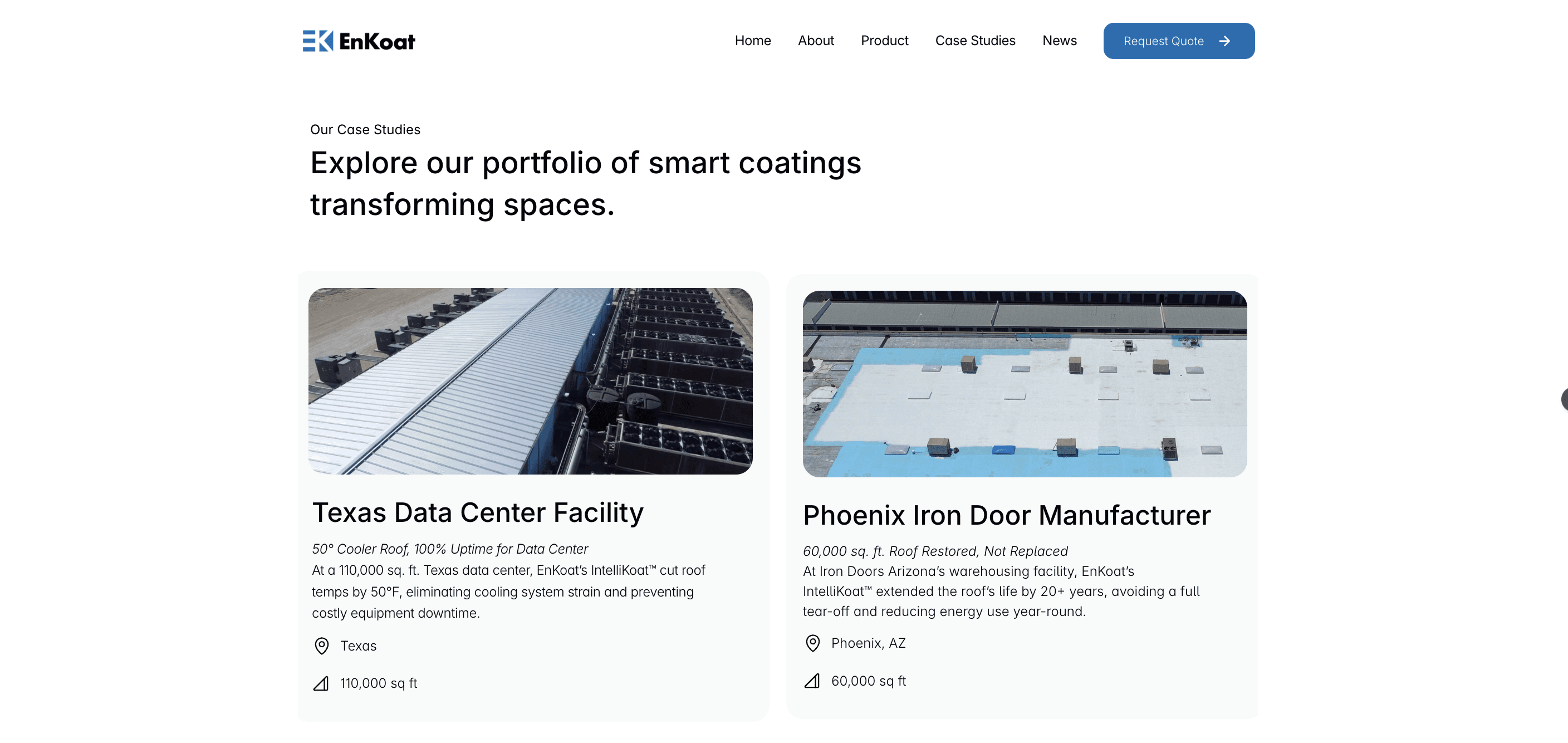
Streamlined and Categorized Content
Reorganized site architecture and information hierarchy to make navigation intuitive, improving content discoverability and user flow.
03
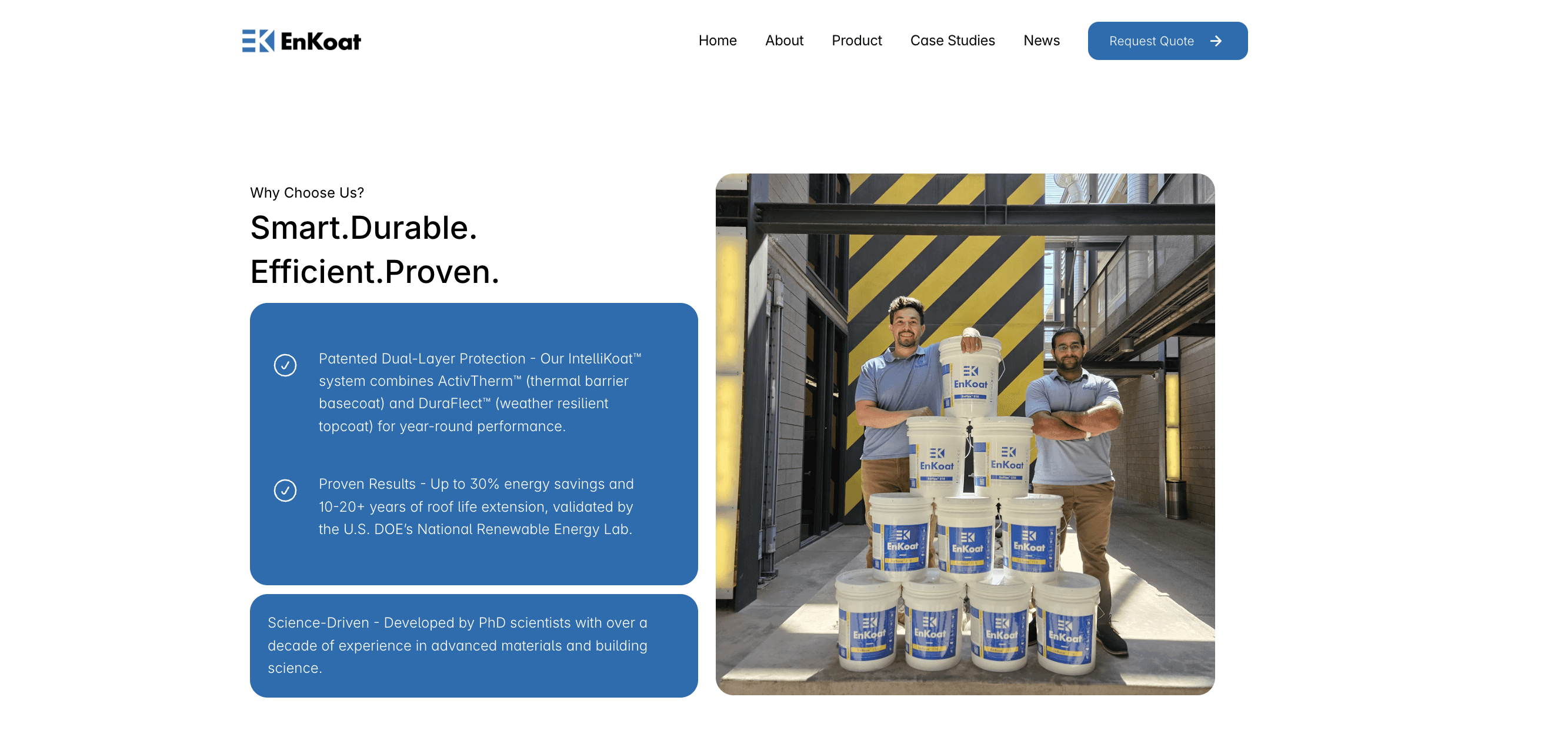
Ensured Visual Consistency and Accessibility
Built a cohesive design system with balanced typography, accessible color contrast, and unified UI components for an inclusive experience.
KEY TAKEAWAYS
Key UX improvements focused on usability, accessibility, and interactive design to enhance user engagement and satisfaction.